

Why your phone photos of your dishes don't sell (and how to fix them)
A customer looking at your menu or your delivery listing sees the photo first and reads the name of the dish second. If the photo isn't appetising, the dish loses its chance before anyone reads the description. The good news is that almost everything that goes wrong in a phone photo can be fixed, and most fixes cost nothing.
What looks wrong in a phone photo of a dish
There are five things, and it's worth checking them in this order because the first one matters more than the rest.
1. The light
The light in a dining room is usually warm, low and comes from above. In a photo that means a yellowish cast, hard shadows under the plate and glare on sauces. The flash makes it worse: it flattens the dish and shines on everything wet.
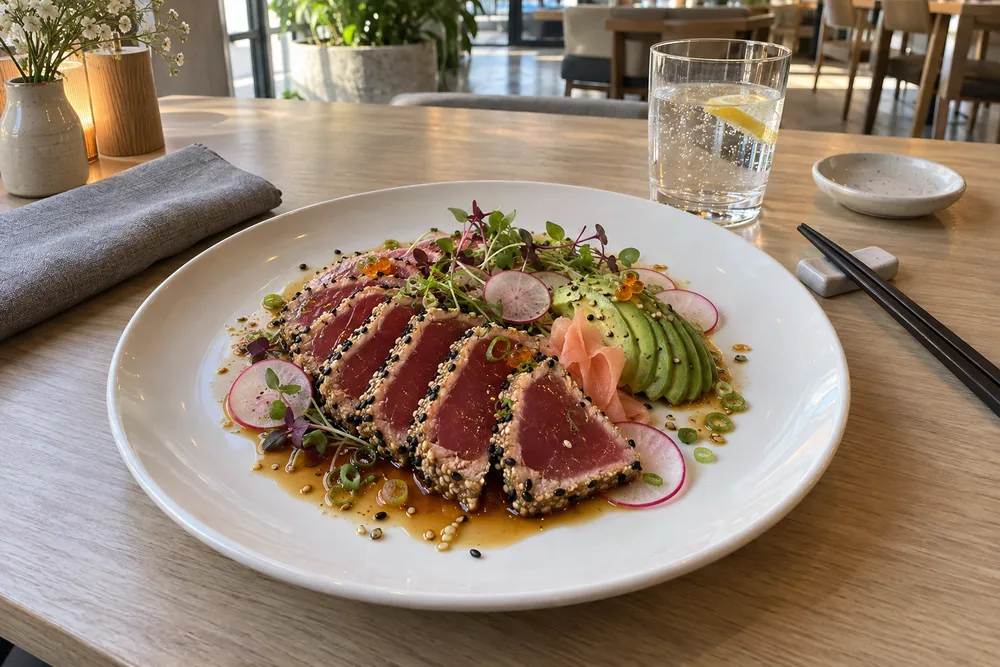
What to do: put the plate next to a window with the light coming in from the side, and avoid direct sun (a thin curtain or a sheet of baking paper in front softens it). Turn the flash off, along with any ceiling spotlight close by. If your venue has no windows, a table near the door in daylight beats any corner full of bulbs.
2. The background
A photo taken at a dining table picks up everything: napkins, the water bottle, someone else's phone, the salt, the menu. The eye goes to those objects and not to the dish.
What to do: clear the table and leave only the plate and, if you like, one element that tells a story (a glass, a piece of cutlery). A plain surface with no pattern, such as smooth wood or a board, works better than a printed tablecloth.
3. The angle
Every dish has an angle that flatters it. Flat dishes (pizza, salads, bowls, boards) look good from above, with the phone parallel to the table. Tall dishes (burgers, cakes, sandwiches) call for a low angle, almost level with the plate, so you can see the volume. In between, at around 45 degrees, is the angle that reads best at a glance for most dishes with sauce or texture.
What to do: pick one angle per type of dish and always use it. If you shoot from above, don't tilt the phone: the edges of the plate come out distorted.
4. Framing and a clean plate
A plate cut off at the edge of the frame, a drop of sauce on the rim or a fingerprint on the lens shows far more than it seems to when you take the photo.
What to do: wipe the rim of the plate with a cloth before shooting, wipe the lens with your shirt, leave some space around the plate (you can always crop later, but you can't add what wasn't captured) and tap the screen on the dish to focus. Don't use digital zoom: move closer yourself.
5. Consistency between dishes
This is what shows most on a menu and what gets the least care. A menu with twelve photos taken at twelve different tables, in different light and from different angles looks messy, even if every photo is good on its own.
What to do: take all the photos in one session, at the same table, at the same time of day, from the same angle for the same type of dish and, where possible, on the same tableware. It's faster than doing one dish a day, and the result looks like the menu of a single restaurant.
What you can do today with your phone
A checklist for a one-hour session:
- Pick the table by the window and clear it completely.
- Shoot in daylight, with no flash and no direct sun on the plate.
- Wipe the rim of the plate and the lens before every photo.
- Use the same angle for each type of dish: from above for flat ones, low for tall ones.
- Take five to ten photos of each dish and keep the best one.
- Do all the dishes in a row, at the same table and in the same light.
With this, your phone photos improve without spending anything. They have a limit, and it helps to know when you reach it.
When a studio photo is worth it
A studio photo is worth it in any of these situations:
- You have lots of dishes and little time. Preparing, shooting and retouching every dish takes hours you don't have in the middle of service.
- The photo has to work in several places. The same photo serves on the menu, in delivery apps, on a poster and on social media, and each place asks for a different format.
- You change the menu often. Every new dish is a new session, and consistency with the others is lost.
- You want one particular dish to stand out. The signature dish or the dish of the day deserves a carefully made photo.
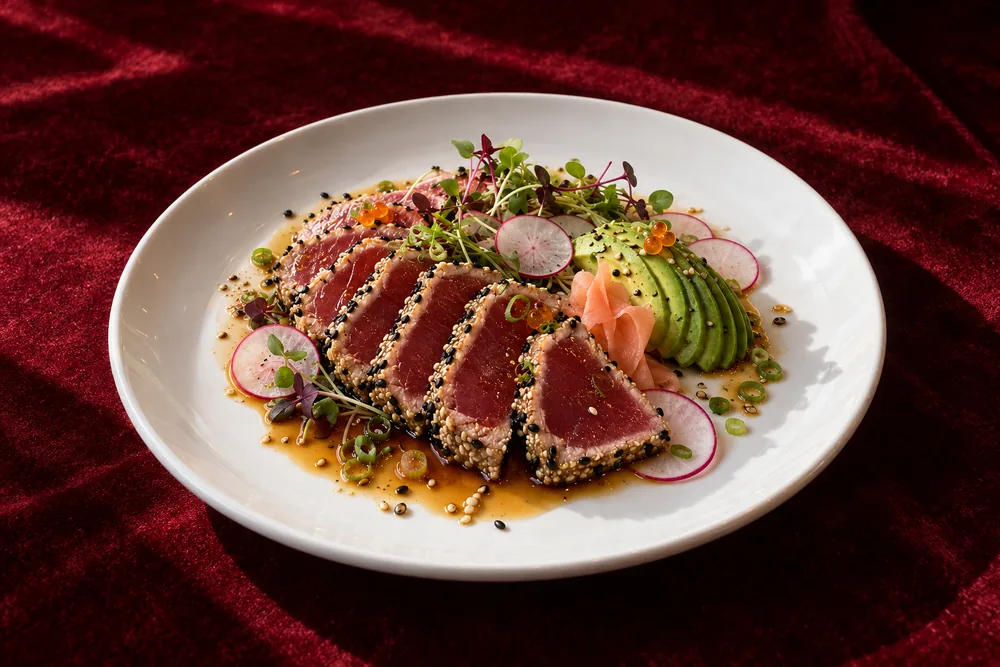
The options are a food photographer (a very good result, but you have to organise the session, bring the dishes and pay for each one) or a tool that starts from your phone photo and takes it to a studio finish. With Fundido you photograph the dish with your phone, choose the table, the light and the camera in a 3D set and see the result before the photo is created. The better your starting photo is (whole dish, in focus and in window light), the better the result. Plans start at €15 a month with no lock-in, and the first 100 venues get 5 free photos for 48 hours.
Frequently asked questions
Which angle works best for photographing a dish?
It depends on the dish. Flat ones (pizza, salads, bowls) look best from above, with the phone parallel to the table. Tall ones (burgers, cakes) call for a low angle, almost level with the plate. For everything else, an angle of around 45 degrees works. What matters is repeating the same angle for the same type of dish.
Do I need lighting equipment to take good photos with my phone?
No. A window with daylight is enough and is better than a cheap lamp. Avoid the flash and direct sun on the plate; if the light is very strong, soften it with a thin curtain.
Does my phone's portrait mode help?
Use it with care. It blurs the background using the phone's own calculations and sometimes cuts out the edges of the plate or the cutlery badly. A normal photo with a clear table is safer.
How many photos should I take of each dish?
Between five and ten, moving the phone a little between shots, and keep the best one. It's the quickest way to get the framing right.
When is it worth moving from a phone photo to a studio photo?
When you have lots of dishes, when the photo has to work on the menu, in delivery apps and on social media at the same time, when you change the menu often or when you want one dish to stand out.